Thanksgiving History and Traditions. ESL/ESOL/EFL A1-A2 video

Where the American Thanksgiving came from and what families actually do on the fourth Thursday of November. Suitable for teenagers and adults at A2 and above, with plenty to compare against harvest traditions elsewhere.

Practise with this video

Thanksgiving History and Traditions (A2 Level) Interactive task · 13 questions · A2 Start →

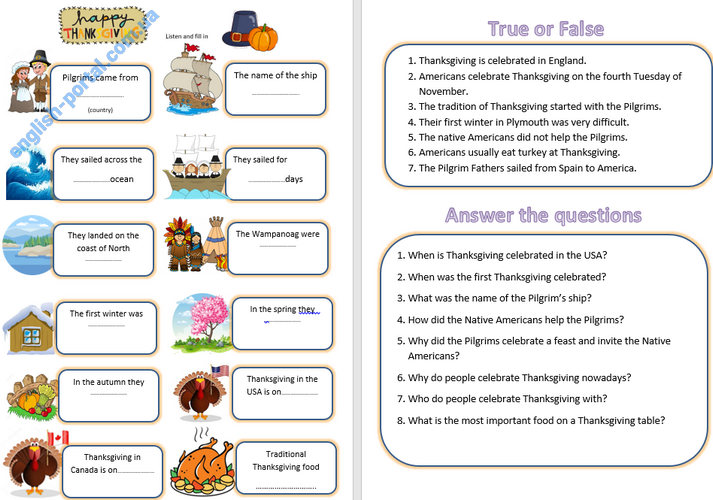
Thanksgiving falls on the fourth Thursday of November and is the day most Americans travel home for. The history behind it – the Mayflower, a brutal first winter, and the harvest shared with the Wampanoag people who had shown the settlers how to farm – is worth telling honestly, including what came afterwards for the Native American nations. Older classes can hold both halves of that story at once, and the discussion is a better lesson than the harvest feast alone.

The language side is straightforward: past simple for the history, present simple for what families do now, and the phrase to be thankful for, which gives every student a sentence that is true for them.

Frequently Asked Questions

When is Thanksgiving in the United States?

On the fourth Thursday of November, which makes the date move between 22 and 28 November. Many people take the Friday off as well, turning it into a long weekend for travelling home.

How did Thanksgiving begin?

From a harvest celebration held by the Pilgrims after their first successful crop in the seventeenth century, shared with the Native Americans who had taught them how to farm the land. The harvest meal became the pattern for the holiday that followed.

Is Thanksgiving celebrated outside the United States?

Canada has its own Thanksgiving on the second Monday of October, tied to an earlier harvest in a colder climate. Elsewhere the holiday is known mostly through American films and television rather than celebrated.