Thanksgiving Day. Traditions. ESL/ESOL A1-A2

The Thanksgiving meal, the family gathering and the parades, explained in short sentences for beginners. A1-A2 learners get the food vocabulary and the phrase "I am thankful for", which turns the topic into real speaking practice.

Practise with this video

Thanksgiving Listening Quiz about Traditions (A1 Level) Interactive task · 11 questions · A1 Start →

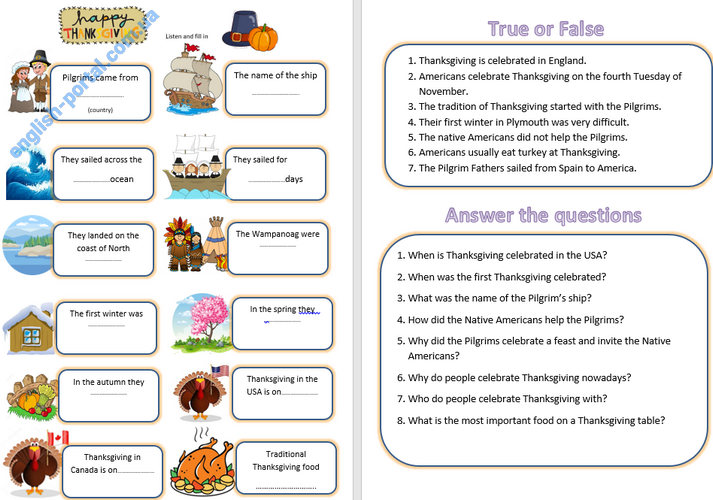
For beginners the holiday is best approached through the table. The meal comes in the afternoon, the whole extended family gathers, and many households go round the table saying what they are thankful for before anyone eats. Afterwards come the parades and the football on television.

That gives a class concrete nouns – turkey, stuffing, gravy, cranberry sauce, pumpkin pie – and one structure worth more than all of them: I am thankful for…. Finish the sentence honestly and a vocabulary lesson turns into speaking practice that students remember, which is not something a food list usually achieves.

Frequently Asked Questions

What do American families do on Thanksgiving?

They travel home and eat together. The meal comes in the afternoon, the table is set for the whole extended family, and many households go round the table saying what they are thankful for. Afterwards come parades and American football on television.

What food is eaten at Thanksgiving?

Roast turkey with stuffing and gravy is the centre of the meal, with mashed potatoes, sweet potatoes, cranberry sauce and green beans around it, and pumpkin or pecan pie to finish. Leftover turkey sandwiches the next day are almost a tradition of their own.

Which English do I need to talk about this at A1 to A2?

Food nouns and the simple structures around them: we eat, we have, there is, there are, my favourite is. Adding "I am thankful for..." gives beginners a sentence they can complete honestly, which turns vocabulary practice into real speaking.