Black Friday? What is it?
Why the day after Thanksgiving became the biggest shopping day of the year, where the name came from and how it spread to countries that never celebrate Thanksgiving.

Black Friday 2020 Walmart Worksheet audio
Type: worksheet
Category:
Black Friday 2020 Worksheet
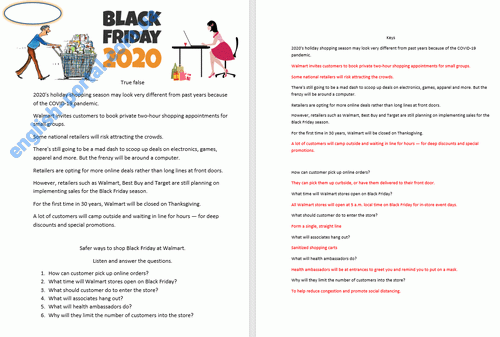
Black Friday 2020 Worksheet audio true false
Type: worksheet
Category:
Black Friday 2020 Worksheet
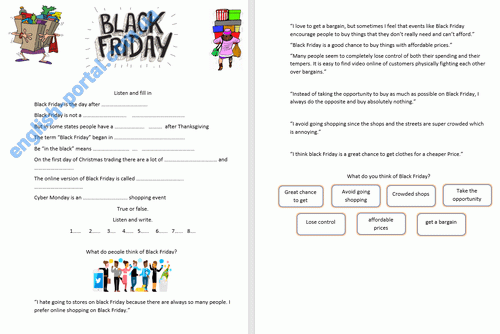
Black Friday Worksheet audio true false
Type: worksheet
Category:
Black Friday Worksheet

Black Friday New Worksheet audio
Type: worksheet
Category:
Black Friday New Worksheet

Black Friday New Worksheet key (PDF)
Type: worksheet
Category:
Black Friday New Worksheet
Frequently Asked Questions
When is Black Friday?
The day after Thanksgiving, so the fourth Friday of November in the United States. Many countries that do not celebrate Thanksgiving now keep the shopping day anyway, and shops often stretch it into a whole week of offers.
Is Cyber Monday the same thing?
No. Cyber Monday is the Monday after Black Friday and began as the online counterpart, when people returned to work and shopped from their desks. The distinction has blurred now that almost everything is bought online.
How do I talk about prices and discounts in English?
Use the fixed phrases: it is on sale, it is half price, it was reduced from forty to twenty, I got it for a tenner, that is a bargain, that is a rip-off. These come up in any conversation about shopping, not only in November.