Tag questions are short questions added at the end of a statement to check or confirm something.
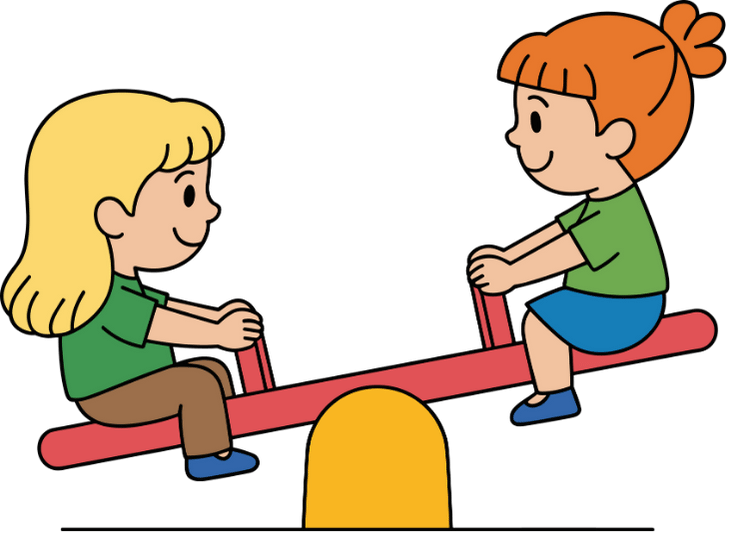
Making a tag
question is like
riding a see-saw —
you have to keep
the balance.
question is like
riding a see-saw —
you have to keep
the balance.
 positive
 negative
 positive
negative
negative positiveShe often cooks.
First things first — figure out the tense.
It's present simple.
Is it negative or positive?
positiveRemember our? The tag question should be negative.
? The tag question should be negative.Think of the negative form in the present simple.
doesn’t
Doesn’t who?
she.
She often cooks, doesn’t she?
You didn’t eat.
First things first — figure out the tense.
It's past simple.
Is it negative or positive?
negativeRemember our? The tag question should be positive.
? The tag question should be positive.Think of the positive form “didn't” .
did
Did who?
you.
You didn’t eat, did you?
Not so fast.
Some structures have special tags.
Some structures have special tags.
I am ............................ aren’t I?
I used to .......................didn’t I?
Imperative ................ will you / won’t you / can you / could you?
Let’s ..................................... shall we?
Let me / him, etc. ...... will you / won’t you?
I used to .......................didn’t I?
Imperative ................ will you / won’t you / can you / could you?
Let’s ..................................... shall we?
Let me / him, etc. ...... will you / won’t you?
Don’t ............................. will you?
I have got .................... haven’t I?
I have ........................... don’t I?
There is / are .... isn’t there? / aren’t there?
This / That is ........................ isn’t it?
I have got .................... haven’t I?
I have ........................... don’t I?
There is / are .... isn’t there? / aren’t there?
This / That is ........................ isn’t it?
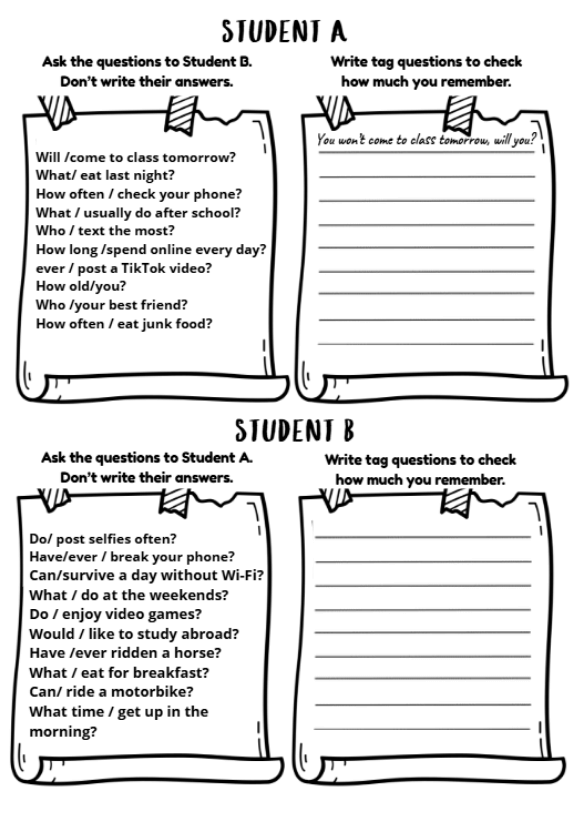
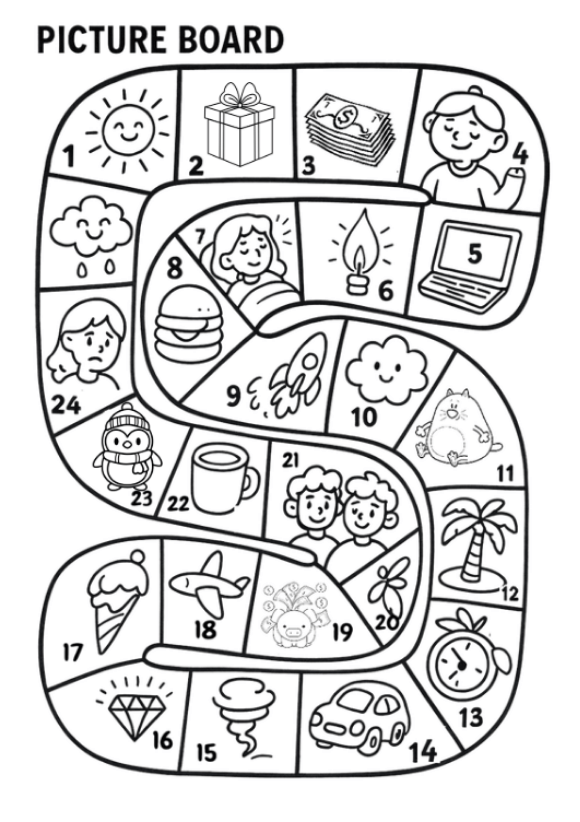
Dowload Free Tag questions speaking games.
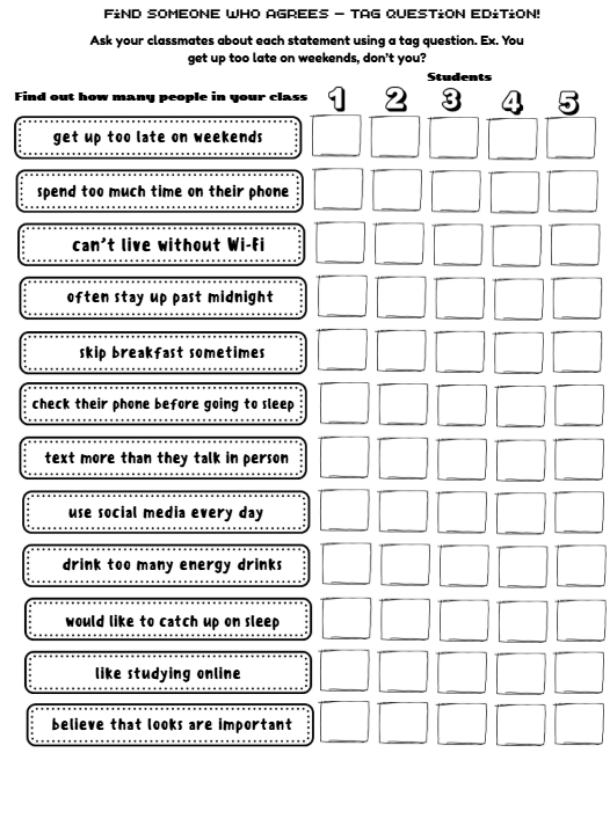
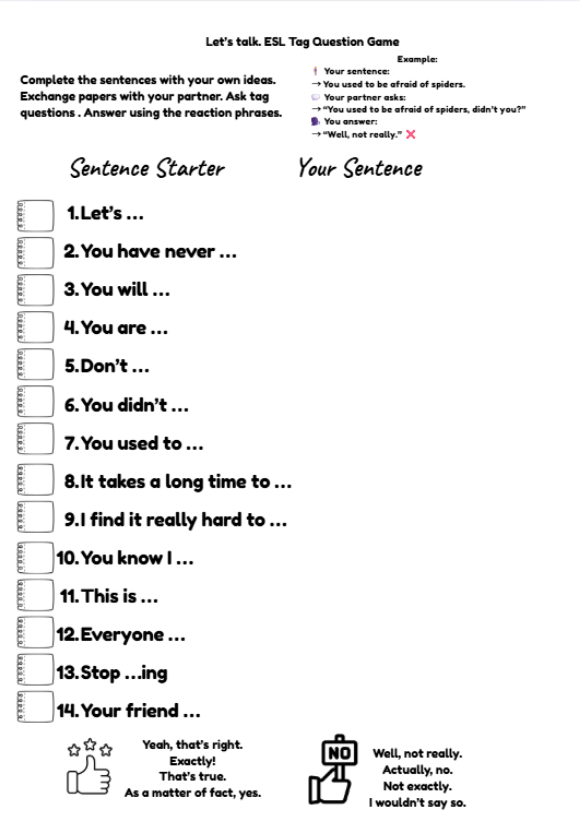
Dowload Free Tag questions speaking games.